About Us

We are the only group of ambitious undergraduate students at the University of Toronto that is obsessed with educating and engineering neurotechnology projects to benefit the greater university and Toronto community.

Origin

For nearly a decade, NeurotechUofT has been shaping the landscape of undergraduate neuroengineering at the University of Toronto. What began in 2016 as a small group of students experimenting with EEG boards and early brain–computer interface workshops has grown into one of the most active and enduring student-run neurotechnology communities in Toronto.
2016

Foundation

NeurotechUofT began quietly in 2016, started by a small group of students who simply wanted to learn more about brain–computer interfaces. There was no roadmap, no grand plan; just curiosity, a couple of OpenBCI boards, and a desire to build things together.

2017–2022

Early NTX Era: Small, Fun, Experimental Projects

Early NTX Era: Small, Fun, Experimental Projects The team develops small but creative North American NeuroTechX (NTX) competition submissions each year. These projects, fun, lightweight, and exploratory, become annual traditions that help students learn signal processing, EMG/EEG acquisition, and prototyping in a low-stakes environment.

2023

Last NTX ProjectProsthetic Hand Exoskeleton

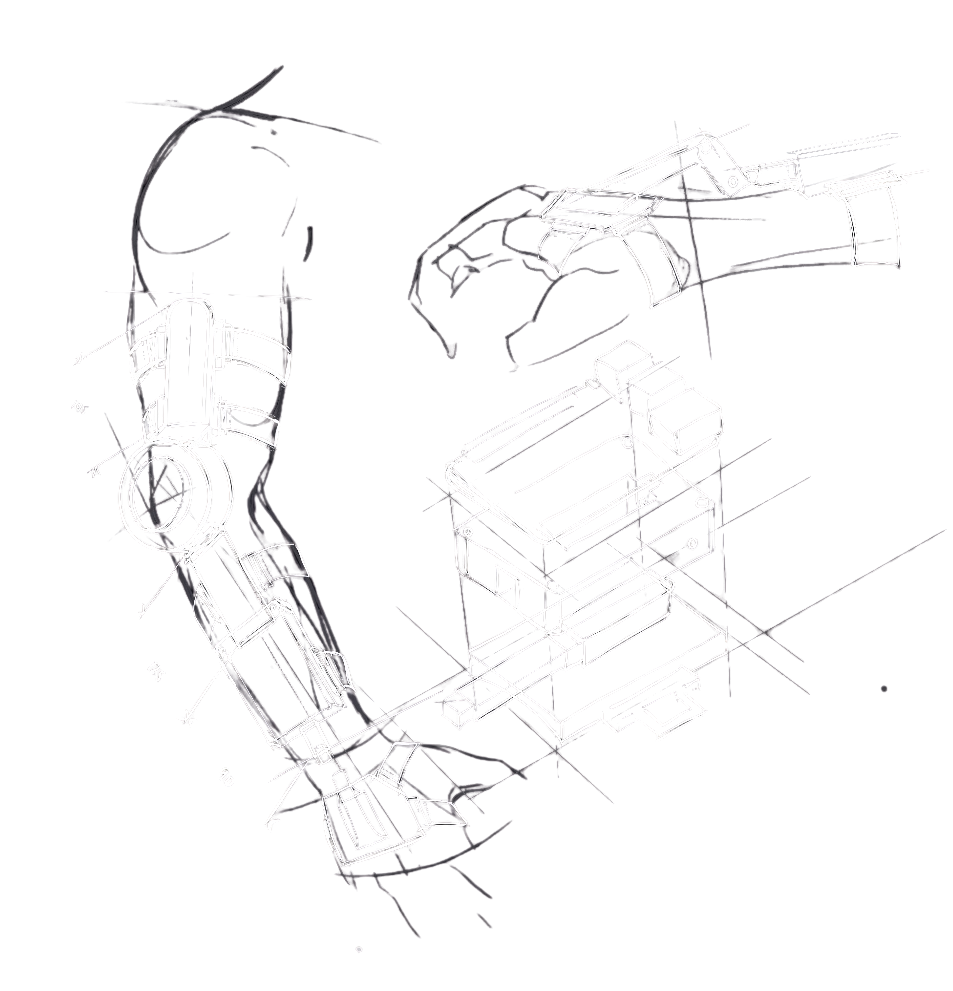
NeurotechUofT takes a significant step forward with its first full-scale engineering system: an EMG-controlled prosthetic hand exoskeleton for the NTX Student Competition. This marked a shift from recreational projects toward more rigorous, structured design.

2024

Major Revamp: New Identity, New Direction

NeurotechUofT undergoes a major rebranding and structural revamp, divesting from the NeuroTechX competition after eight years. The team redefines its mission and vision, shifting from short-term student projects to long-term neuroengineering impact. This year marks the transition from a competition-focused club to a research- and innovation-driven organization, setting the foundation for sustained growth and academic contribution. NeurotechUofT launches NeuronMove v1, its largest project to date: a closed-loop neurotechnology system designed to detect Parkinsonian tremors and akinesia and stabilize movement using EMG/EEG-driven actuation.

Today

The Most Active and Significant Evolution in Our History

2025 marks the most transformative year NeurotechUofT has ever experienced. The team doubles in size and adopts a more rigorous recruitment standard, and officially opening its doors to highly engaged masters and PhD students. With the introduction of the 7 Core Principles, NeurotechUofT strengthens its identity around first-principles reasoning, accountability, and high technical standards. This new culture sets the stage for launching two major R&D projects: NeuronMove v2, an advanced continuation of our Parkinson’s closed-loop system, and the Post-Stroke Rehabilitation (PSR) Project with UTMIST, expanding our work into neurorehabilitation. These initiatives, alongside deepened affiliations with the Krembil Brain Institute and SickKids, elevate NTUT’s visibility among clinicians, neuroscientists, and neurosurgeons, creating new pathways for students to contribute to impactful academic research and published scientific work. Beyond R&D, the Community & Education Arm is fully rebuilt, expanding workshops, clinical observorships, pipelines, and learning programs for both undergraduate and graduate members. NeurotechUofT also officially launches its podcast as a full-scale initiative, amplifying our presence in the broader neurotechnology community.

Mission

“NeurotechUofT’s mission is to empower students to design neuroengineering technologies that create real, measurable impact in healthcare. As U of T’s only student design team dedicated exclusively to neuroengineering, we bring together engineering, neuroscience, and clinical insight to develop systems that advance human function: from biosignal-driven prosthetics to neuromodulation-inspired assistive devices. Through collaborations with the Krembil Brain Institute, UHN, SickKids, and the Institute of Biomedical Engineering, we offer students observerships, mentorship, and hands-on exposure to clinical and academic environments. At NTUT, students don’t just learn about the brain, they engineer solutions for it.”
Our work spans three tightly integrated subsystems
🛠️

Subsystem

Hardware

Building embedded signal-acquisition devices, actuators, and wearable systems that bring intent-driven movement to life.

💻

Subsystem

Software

Developing real-time signal processing pipelines, machine learning models, and adaptive control algorithms.

🧠

Subsystem

Neuroscience

Ensuring physiological accuracy, clinical relevance, and alignment with translational research goals.

Our Values

Core Principles

Principle

Think From First Principles

Don’t copy. Don’t assume. When faced with a challenge, break it down into smaller problems. Identify what’s known, isolate what isn’t, and reason up with fundamentals from the ground.

01

Principle

Challenge Ideas, Not People

Debate is welcome, but egos aren’t. The best ideas win, not the loudest voices. Every voice matters, but professionalism is non-negotiable.

02

Principle

Facts > Feelings, but Instinct Always Wins

Lead with common sense, reasoning, and data. But when the evidence runs out and decisions still need to be made, listen to others, then trust your gut and move on.

03

Principle

Commit to the Process

Great engineering may come with trade-offs: time, comfort, or certainty. Progress often requires stretching beyond what feels easy, but never expect to carry the weight alone. Ask for support when in need. Take pride in the growth that comes with working together as a team.

04

Principle

You’re measured at your worst, not your best

It’s easy to be focused when things are smooth. But who we are shows up during the most stressful week of the year, when everything breaks and pressure peaks.

05

Principle

The Most Dangerous Word in Our Dictionary: Bureaucracy

Process matters, but progress matters more. Skip unnecessary chains of command if they exist, and don’t create hierarchy where it isn’t needed. Minimize meetings and regulations to maximize creative independence. We care about getting things done, not protocol for protocol’s sake.

06

Principle

Think Beyond Limits, Build Within Reach

It’s good to aim higher than what seems realistic. Every breakthrough began as a “what if.” Be bold when imagining what’s possible, and realistic when planning how to get there. Balancing vision with pragmatism is what drives true progress.

07